UA-9726592-1
Showing posts with label the gavel. Show all posts

Wednesday, May 30, 2012

SFGate: Nancy Pelosi goes on the attack against Mittens


Former Democratic Speaker Nancy Pelosi

"The House minority leader said Republicans tout the private sector's role in creating jobs and say they are "the ones who say they're risk takers."

But the Romney campaign's aggressive attacks on Obama over Solyndra, which went belly-up after receiving a $535 million federal loan guarantee, sends the opposite message.

"Now all of a sudden, they're saying, 'don't take risks,' " she said."

Rightardia thinks we need Nancy Pelosi back bad as the speaker. We used to read The Gavel, the US House blog,  which had things going on in it all of the time. Several new bills were introduced weekly. At that time The Gavel had a positive tone.

When John Boehner took over The Gavel became an attack vehicle against the president.

Here are the cirrent headline articles in The Gavel.
  1. Where’s Senate Democrats’ Plan to Stop Student Loan Rates from Doubling?
  2. Summer Plans for Republicans “Heavy on Jobs”
  3. ObamaCare to Tax Job Creators “Out of Existence,” Send Jobs Overseas
  4. Speaker Boehner's Memorial Day Message
  5. Weekly Address Highlights: Memorial Day & the GOP Jobs Plan

That's it! 

Why, because the 112th House was ineffective and only passed 75 bills in a two year period which is a historically low output for the House.

The 112th went out of session with a 17 per cent overall favorability rating from Gallup, a historic low. It's favorability rating during the last week was 12 per cent, even lower.

Anyone who thinks Republicans should continue to control the House is misinformed. The 112th was a "do nothing" House.

it was a national embarrassment.

Nancy Pelosi and the Democrats did a far better job of running the House.

Even the founders would have been impressed with her work as speaker! 

See the SFGate article: Nancy Pelosi goes on attack against Romney

Subscribe to the Rightardia feed: http://feeds.feedburner.com/blogspot/UFPYA

Creative Commons License


Rightardia by Rightard Whitey of Rightardia is licensed under a Creative Commons Attribution 3.0 Unported License.

Permissions beyond the scope of this license may be available at rightardia@gmail.com.

Wednesday, September 15, 2010

The Gavel: The Top 5 Tax Cut Whoppers Republicans are Peddling:

September 14th, 2010 by Speaker's Press Shop

As the debate heats up over the Obama Middle Class Tax Cut, Congressional Republicans are playing fast and loose with the facts. They will do or say anything to protect the richest 2 percent of Americans from returning to the tax rates of the 1990s, including raising taxes on 98 percent of Americans – after a decade proved their deficit-busting giveaways did nothing to grow the American economy.

Here’s a primer on the rhetoric the Republicans are using in the fight to hold tax cuts for middle-class Americans hostage.

Whopper #1: We don’t have a taxing problem; we have a spending problem.

TRUTH: A decade of Republican rule in Washington nearly doubled the national debt, and turned a record surplus into a record deficit. It’s time to stop exploding the deficit with a $700 billion giveaway to the wealthiest Americans – which economists have shown has not trickled down to the Middle Class.

Whopper #2: Democrats want to raise taxes on America’s small businesses.

TRUTH: Led by Democrats, this Congress has cut taxes eight times for small businesses – over the objections of Republicans.

Not giving a deficit-busting tax cut to the wealthiest few would ALSO not affect the vast majority of America’s small businesses. The nonpartisan Pulitzer Prize-winning PolitiFact labeled this GOP claim a “pants on fire” falsehood. As PolitiFact concluded:

Two independent studies that looked at the impact of the Democratic proposal on small businesses found that only between 2 to 3 percent of tax filers who report having what can be thought of as small business income will be affected.

Whopper #3: Okay so it’s only 3% of small businesses – but that 3% includes 750,000 businesses and accounts for 50% of small business income.

TRUTH: Who are they? Included in that small percentage of “small businesses” affected (2-3 percent) is anyone who receives any type of partnership or business income – and many of them are not what you would consider “small business owners.” They include hedge fund managers, private equity fund managers, owners of privately held multinational companies, lobbyists, and partners in major law firms.

Whopper #4: Tax cuts for the rich create jobs.

TRUTH: America is just starting to come out of the worst economy since the Great Depression after a decade of a giant tax cut for the rich. Conversely, we had our strongest economy in years – creating 22 million jobs – and four years of budget surpluses at the end of the Clinton administration. Democrats would like to return to that kind of economic growth, deficit control, and tax rate for the wealthiest few.

In fact, top economists have busted the myth that tax cuts for the rich create jobs.

Alan Blinder, Co-Director of Princeton University’s Center for Economic Policy Studies and former Vice Chairman of the Fed:

Not all budgetary dollars are created equal. Some have a lot of bang for the buck, and some have very little. The GDP increase per dollar of budgetary cost is in the range of 1.6, 1.7 for things like food stamps and unemployment benefits, and in the range of .35 for extending the Bush tax cuts. We could get some substantial job creation by simply reprogramming the $75 billion that would be saved over the next two years by not extending the upper-bracket Bush tax cuts and spending it instead on unemployment benefits, food stamps, and the like.


William Gale, Co-Director of the Tax Policy Center:

Are there other ways to use that same amount of money that would give a bigger bang for the buck? The answer is definitely yes…Extending the Bush tax cuts came in No. 11 [in a recent CBO analysis] – the worst option, the lowest bang for the buck of any of the other options.

Paul Krugman, New York Times Columnist and Winner of Nobel Prize for Economics:

…it’s hard to think of a less cost-effective way to help the economy than giving money to people who already have plenty, and aren’t likely to spend a windfall.

Whopper # 5: We shouldn’t raise taxes on Americans in a recession.

TRUTH: That’s not what’s being proposed. Congressional Democrats and President Obama will permanently cut taxes for 98 percent of Americans and 97 percent of small businesses – and help get the Bush deficit under control.

Rightardia uses the Moody's graphic because it dispels a lot of BS  of what the government can do to boost the economy. 

It is clear that tax cuts are one of the least effective approaches a government can use, particularly if the tax cuts only benefit a small sector of society like the affluent.

Subscribe to the Rightardia feed: feeds.feedburner.com/blogspot/IGiu

Netcraft rank: 8665
http://toolbar.netcraft.com/site_report?url=http://rightardia.blogspot.com

Thursday, May 20, 2010

The Gavel: DISCLOSE Act Passes House Administration Committee

The Gavel | May 20th, 2010 by Karina

Tonight, the Committee on House Administration passed the DISCLOSE Act (HR 5175) out of Committee.

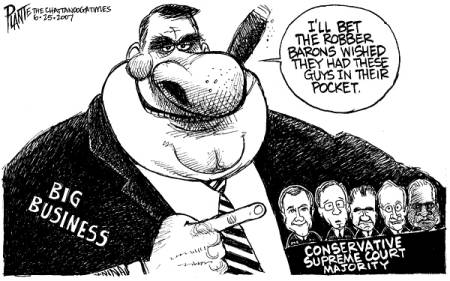
The bipartisan bill introduced by Reps. Chris Van Hollen (D-MD), Mike Castle (R-DE), Walter Jones (R-NC), and Robert Brady (D-PA) responds to the Supreme Court’s ruling in Citizens United v. FEC.

That unpopular ruling overturned the ban on corporate contributions under the McCain-Feingold Act to political campaigns by increasing transparency and disclosure of political spending, and preventing foreign companies from influencing America’s elections. It will also ensure that entities that receive taxpayer money can’t turn around and spend money in elections.

Read the bill»

Speaker Pelosi on today’s passage:

Today the House of Representatives made critical progress on The DISCLOSE Act, to protect our elections from being overtaken by special interest money and influence.
The recent Supreme Court decision in the Citizens United case opened the floodgates for the corporate takeover of elections. With this legislation, Congress has acted to help ensure that the special interests do not drown out the voices of America’s voters.

In a recent John Zogby poll, two thirds of Americans expressed dissatisfaction with the US Supreme Court. See http://tinyurl.com/2aodls6

This legislation restores transparency and accountability to our campaigns, and ensures that Americans know who is really behind political advertisements. This bill requires corporations to stand by their ads in the same way candidates do, and prevents foreign-owned entities from participating in our elections.

It prevents the use of taxpayer dollars to sway elections, and sets high standards for financial disclosure by outside groups seeking to influence our democratic process.

In short, this legislation reaffirms a fundamental American value: the people decide our elections, not the special interests. I look forward to bringing this bill to the House floor soon.

President Obama:

Today, the House Administration Committee took another important step toward putting in place critical protections to control the flood of special interest money into American elections. The DISCLOSE Act, now moving to debate on the floor of the House of Representatives, would establish the toughest-ever disclosure requirements for election-related spending by big oil corporations, Wall Street and other special interests.

It would prohibit foreign entities from manipulating the outcome of U.S. elections, and it would shine an unprecedented light on corporate spending in political campaigns so that the American people can clearly see who is trying to influence campaigns for public office.


These changes are particularly urgent in the aftermath of the Supreme Court’s Citizens United decision, and I encourage the full Congress to give this strong, bipartisan legislation the swift consideration it deserves.  

Posted in What's Happening, Draining the Swamp, Oversight.

See the complete story at: http://abcnews.go.com/Business/wireStory?id=10696150

Subscribe to the Rightardia feed: feeds.feedburner.com/blogspot/IGiu 
Netcraft rank: 8301 http://toolbar.netcraft.com/site_report?url=http://rightardia.blogspot.com


Friday, September 25, 2009

New Poll Finds Majority of Americans Support Health Insurance Reform

The Gavel

New Poll Finds Majority of Americans Support Health Insurance Reform
September 25th, 2009 by Karina

A CBS/New York Times poll released today shows widespread support for reforming the health insurance system – including an overwhelming number of people who favor a public health insurance option and other components included in the America’s Affordable Health Choices Act:


The poll also found that 56 percent are concerned that they will be without health insurance at some point in the future if the government does not provide a system of ensuring coverage for all Americans. Earlier this week, the Treasury Department released a study showing that from 1997 to 2006 (a period characterized by economic growth and job creation), nearly half of non-elderly Americans went without coverage at some point:

48 percent are uninsured at some point over a ten-year span

41 percent go without coverage for at least six months over a ten-year span

36 percent go without coverage for at least one year over a ten-year span

In addition, the poll released today found 64 percent of Americans believe Republicans are putting politics over policy and standing in the way of health care reform for political reasons. The New York Times points out:

But the poll suggests that Mr. Obama is in a decidedly more commanding position than Republicans on this issue as Congressional negotiations move into final stages. Most Americans trust Mr. Obama more than Republicans to make the right decisions on the issue; 76 percent said Republicans had not even laid out a clear health care plan. And by a lopsided margin, respondents said that Mr. Obama and not Republicans had made an effort to cross party lines and strike a deal that has the support of both parties.

Posted in Consumer Protections, Affordable Health Care, In the News

source: http://speaker.house.gov/blog/

Get 30 days of free traffic analysis simply by going to Web-Stat: http://www.web-stat.com/?id=2955

Subscribe to the Rightardia feed: feeds.feedburner.com/blogspot/IGiu

Netcraft rank: 8774 http://toolbar.netcraft.com/site_report?url=http://rightardia.blogspot.com

Powered by ScribeFire.

Thursday, August 20, 2009

Credit Cardholders’ Bill of Rights

On May 20th, the House passed the final version of the Credit Cardholders’ Bill of Rights, H.R. 627 and the President signed the bill into law on May 22nd.
   
It is time to rebuild our economy in a way that's consistent with our values – an economy that rewards hard work and responsibility, not high-flying finance schemes; an economy that's built on a stable foundation, not propelled by overheated housing markets and maxed-out credit cards. We want to build an economy that offers broadly shared prosperity for the long run. 

As every American faces reality in budgeting, the credit card industry that has exploited loopholes in the law to make profits at the expense of responsible credit cardholders and faced minimal oversight, needs a reality check too.

Credit-card debt in the U.S. has reached a record high —nearly $1 trillion -- and almost half of American families currently carry a balance, and their average balance was $7,300 in 2007.  One-fifth of those carrying credit-card debt pay an interest rate above 20 percent.  In 2008, credit-card issuers imposed $19 billion in penalty fees on families with credit cards. 

The Credit Cardholders’ Bill of Rights will give consumers the rights and information they need to make educated decisions about their financial lives and could save some families thousands of dollars.

This legislation will apply common-sense regulations that would ban unfair rate increases and forbid abusive fees and penalties.  For example, it will prohibit retroactive interest rate hikes on existing balances, double-cycle billing (charging interest twice for balances paid on time), and due-date gimmicks. It will also require 45-days’ advance notice of interest rate, fees, and finance charges hikes, require payments to be applied fairly to the highest interest rate balance first, and strengthen credit card protections for young people. 

It mandates greater transparency to give consumers clear information, such as requiring credit cards to post their agreements online, and holds those responsible who engage in deceptive practices that hurt families and consumers, by beefing up monitoring, enforcement, and penalties for violations of the law.

The Credit Cardholders’ Bill of Rights:

Prevents Unfair Increases in Interest Rates and Changes in Terms
  • Prohibits arbitrary interest rate increases on existing balances, unless the consumer is 60 days late on a payment or fails to comply with a workout agreement.
  • Eliminates “universal default,” where card issuers raise interest rates because of lateness or default with other creditors — even if the cardholder is in good standing with the card in question;
  • Requires a credit card issuer who increases a cardholder’s interest rate to periodically review and decrease the rate if indicated by the review;
  • Prohibits issuers from increasing rates on a cardholder in the first year a credit card account is opened;
  • Requires promotional rates to last at least 6 months.

Prohibits Exorbitant and Unnecessary Fees
  • Prohibits issuers from charging a fee to pay a credit card debt, whether by mail, telephone, or electronic transfer, except for live services to make expedited payments;
  • Prohibits issuers from charging over‐limit fees unless the cardholder elects to allow the issuer to complete over‐limit transactions, and also limits over‐limit fees on electing cardholders;
  • Requires penalty fees to be reasonable and proportional to the omission or violation;
  • Strengthens protections against excessive fees on low‐credit, high‐fee credit cards.

Requires Fairness in Application and Timing of Card Payments
  • Requires payments in excess of the minimum to be applied first to the credit card balance with the highest rate of interest;
  • Prohibits issuers from setting early morning deadlines for credit card payments;
  • Requires credit card statements to be mailed 21 days before the bill is due rather than the current 14.

Protects the Rights of Financially Responsible Credit Card Users
  • Prohibits interest charges on debt paid on time (double‐cycle billing ban);
  • Prohibits late fees if the card issuer delayed crediting the payment;
  • Requires that payment at local branches be credited same‐day;
  • Requires credit card companies to consider a consumer’s ability to pay when issuing credit cards or increasing credit limits.

Provides Greater Disclosure of Card Terms and Conditions
  • Requires cardholders to be given 45 days notice of interest rate, fee and finance charge increases;
  • Requires issuers to provide disclosures to consumers upon card renewal when the card terms have changed;
  • Requires issuers to disclose the period of time and total interest it will take to pay off the card balance if only minimum monthly payments are made;
  • Requires full disclosure in billing statements of payment due dates and applicable late payment penalties.

Strengthens Oversight and Penalties Credit Card Industry Practices
  • Requires each issuer to post its credit card agreements on the Internet, and provide those agreements to the Federal Reserve Board to post on its website;
  • Requires the Federal Reserve Board to review the consumer credit card market, including the terms of credit card agreements and the practices of credit card issuers and the cost and availability of credit to consumers;
  • Requires Federal Trade Commission rulemaking to prevent deceptive marketing of free credit reports;
  • Increases existing penalties for companies that violate the Truth in Lending Act for credit card customers.

Ensures Adequate Safeguards for Young People

Requires issuers extending credit to young consumers under the age of 21 to require either a co-signor or proof that the applicant has an independent means of repaying any credit extended.

Limits prescreened offers of credit to young consumers.

Prohibits increases in the credit limit on accounts where a parent, legal guardian, spouse or other individual is jointly liable unless the individual who is jointly liable approves the increase.

Increases protections for students against aggressive credit card marketing, and increases transparency of affinity arrangements between credit card companies and universities.

Generally the credit card provisions take effect in nine months; some provisions, such as the 45-day notification for interest rate increases and 21- day mail requirement, take effect in 90 days.


Gift Card Protections
  • Protects recipients of gift cards by requiring all gift cards to have at least a five-year life span, and eliminates the practice of declining values and hidden fees for those cards not used within a reasonable period of time.

Encourages Transparency in Credit Card Pricing
  • Requires the GAO to study the impact of interchange fees on consumers and merchants, specifically their disclosure, pricing, fee and cost structure.

Protects Small Businesses
  • Requires the Federal Reserve to study the use of credit cards by small businesses and make recommendations for administrative and legislative proposals;
  • Establishes Small Business Information Security Task Force to address the information technology security needs of small businesses and help prevent the loss of credit card data.

Promotes Financial Literacy
  • Requires comprehensive summary of existing financial literacy programs and development of strategic plan to improve financial literacy education.
Nancy Pelosi's blog: The Gavel

Get 30 days of free traffic analysis simply by going to Web-Stat: http://www.web-stat.com/?id=2955

Subscribe to the Rightardia feed: feeds.feedburner.com/blogspot/IGiu

Improve blog traffic with TrafficG http://trafficg.com/splash/splash01.php?uid=eelder1

Netcraft rank: 14155 http://toolbar.netcraft.com/stats/topsites?s=79282FB98226DEC71D1D0E5607A6#14155

Wednesday, August 5, 2009

Astroturf Disrupters are Afraid of the Facts

August 5th, 2009 by Karina


Health insurance reform Opponents are trying to stop the debate. Those disrupting constituent town halls and other public events know that if Americans hear the facts about America’s Affordable Health Choices Act the insurance companies and special interests will lose the debate. Here are the facts they are trying to drown out:

America’s Affordable Health Choices Act means Stability, Security and Quality for all Americans:
No Discrimination for Pre-Existing Conditions, like diabetes, a heart condition, or cancer
No Dropping Coverage Because of Illness
No Refusal To Renew Coverage, if insured is paid in full and becomes ill
No More Job or Life Decisions Made Based on Loss of Coverage
No Need to Change Doctors or Plans, if happy with existing coverage
No Co-pays for Preventive and Wellness Care
No Excessive Out-of-Pocket Expenses, Deductibles or Co-Pays
Yearly Caps on Payments
No Yearly or Lifetime Cost Caps on What Insurance Companies Cover
Astroturf disturbers and special interest opponents are spreading myths:
Myth: The bill will lead to out-of-control deficit spending.
FACT: America’s Affordable Health Choices Act is 100 percent paid for.

Myth: The bill rations care.
FACT: There is absolutely nothing in the bill that would lead to rationing of care. In fact, right now, insurance companies are making those decisions for you.

Myth: The bill ends private health insurance and crowds out employer coverage.
FACT: CBO analysis shows that America’s Affordable Health Choices Act increases the number of people with private health insurance through their employer over the next decade.

Myth: The bill includes damaging cuts to Medicare programs.
FACT: Improvements to Medicare in America’s Affordable Health Choices Act work toward making the Medicare program more sustainable for the future and will reduce Part B premium growth in the coming years.

Myth: The bill promotes euthanasia—making Americans choose how they will die.
FACT: If a doctor and patient choose to have a conversation about end-of-life care and advance care planning, America’s Affordable Health Choices Act simply provides Medicare payment for the doctor’s time.
Astroturf Disrupters’ Tactics and Backers Exposed

While the special interests and Congressional Republicans have been encouraging disruption of public events to try to stop real conversation about health insurance reform, Democrats continue to use the August district work period to communicate with constituents about health insurance reform and America’s Affordable Health Choices Act.

Exposed: Tools of the Special Interests and Republicans

Politico’s The Huddle:
The inevitable backlash against the town halls gone wild has begun, as national conservative interest groups like FreedomWorks and Conservatives for Patients Rights are taking some credit for the hostile crowds, undermining the notion that these are purely local grassroots uprisings…
Think Progress:
Fox’s local Houston affiliate reporter, Duarte Geraldino, reported that he talked to the participants and found that “some attendees admit they don’t live in the district.” How did they get there? Geraldino noted “an internet campaign” by far right activists urging their allies to attend and heckle Democratic Representatives.
Roll Call:
… the groups’ more dramatic tactics… have included the display of Nazi signs, a hanging effigy of Rep. Frank Kratovil (D-Md.) and a tombstone bearing the name of Rep. Lloyd Doggett (D-Texas)
Republicans have openly fanned the flames of the protests…
Grover Norquist, president of the conservative Americans for Tax Reform, said… his group is just one of several organizations, including Americans for Prosperity and the National Conservative Union, that have encouraged members to attend town-hall meetings…
Washington Post:
Conservative activists, though relatively small in number, have disrupted events… Some have been organized by the group Conservatives for Patients’ Rights, whose public relations team helped mastermind the Swift Boat Veterans for Truth attacks against Sen. John F. Kerry (D-Mass.) in his failed 2004 presidential bid.
ABC World News Tonight:
Clearly, some of [the demonstrating] is organized. Bob MacGuffie, grass roots conservative activist wrote a widely circulated memo to put the congressman “on the defensive with your questions and follow-up. The congressman should be made to feel that the majority and significant part opposes the socialist agenda of Washington. The goal is to rattle him…”
… One official from Freedom Works-run by corporate lobbyist Dick Armey says his group is organizing…
Republican Leaders Chose to Encourage Disruptions

Roll Call:
The National Republican Congressional Committee has been sending out e-mails titled ‘Recess Roastings’ that link to news articles and video clips of protesters at local health care events.
The website of Republican Leader John Boehner applauds and links to clips of disruptions and promises “a long, hot August for Democrats in Congress.”

Wanted: A Real Debate
The Post Standard (New York) Editorial:
Central New York isn’t the only place where the debate over health care reform is getting testier than it has to be.
It turns out that the same kind of nonsense is being played out across the country as members of Congress on recess travel through their districts…
… for anyone who treasures a functioning democracy, where ideas from all sides are respectfully debated, it’s a pretty ugly development.
Green Bay Press Gazette (Wisconsin):
The second of two forums U.S. Rep. Steve Kagen hosted this week to explain the health-care bill and get public feedback was hostile but more orderly than a gathering Monday night in Green Bay.
… Tactics used at Monday’s forum at the Brown County Central Library in Green Bay followed the strategy outlined by Bob MacGuffie of the Tea Party Patriots.
Esther Hartzheim of Green Bay said she wanted to have some important questions answered Monday night but left after a half-hour.
‘I couldn’t take it anymore,’ she said. ‘It was clear people weren’t going to allow him (Kagen) to speak. The whole process was ugly. I’m very concerned and angry because this is an important issue.’
Herald Times Reporter (Wisconsin) Editorial:
What appeared to be an organized group of protesters continually shouted [U.S. Rep. Steve Kagen] down as he attempted to press on with his health care message at the Brown County Central Library.
It appeared by all accounts to be an organized protest… It appears some groups are urging aggressive turnouts at congressional listening sessions to protest government policies.

Little was accomplished at the Kagen health-care session, other than disruption. Viewpoints did not receive a proper airing…
Kagen expressed his frustration throughout the event, attended by about 300 people.

He’s absolutely right. There’s no place for mob behavior in these kinds of situations, and it shouldn’t be tolerated. We always can agree to disagree, but shouting down an adversary won’t accomplish anything.
Let order — not unruly mobs — rule the day.
Salisbury Post (North Carolina) Editorial:
Beware of staged disruptions.
With funding and staff support from advocacy groups opposed to health-care reform and to the Obama administration, organized groups have been showing up at congressional town-hall meetings held mostly by Democrats in favor of health-care reform.

… Memos that have cropped up on the Web show that these protests are not intended to be any kind of dialogue but purely disruptive, preferably ending with the member of Congress forced to retreat… The idea is to make opposition to health-care reform seem more widespread than it really is.

… the fact is, what happens while the lawmakers are in their districts for the August recess is critical to what happens this fall.

… The campaign smacks of what political operatives call “Astroturf” — fake grass roots.
Napa Valley Register (California) Editorial:
Monday night’s health care forum in Napa grew unruly and wild, with some critics of the current health care proposals seeking to derail the event, harming their cause and nearly destroying a meaningful forum on a critical topic for Napa and the nation.

The display was unwelcome — and unsuccessful if it was meant to move health care reform supporters toward considering the concerns of the critics. Several callers to the Register on Tuesday reported they were repulsed by the aggressive tactics of some members of the crowd.

To the degree the catcalls, chants and shouts were organized — and it appears from events around the country that they were — we strongly suggest that the organizers find more constructive ways to get their message out.

Get 30 days of free traffic analysis simply by going to Web-Stat: http://www.web-stat.com/?id=2955

source: http://speaker.house.gov/blog/

Subscribe to the Rightardia feed: feeds.feedburner.com/blogspot/IGiu

Improve blog traffic with TrafficG http://trafficg.com/splash/splash01.php?uid=eelder1

Netcraft rank: 19798 http://toolbar.netcraft.com/stats/topsites?s=BE281D838226A4DAC11D0E201A0E#19798