This blog is dedicated to progressive and liberal thought. It also discusses new technology, how technology affects privacy and developments in Russia, China, Eastern Europe and the Middle East. Rightardia fully supports the rights of workers to organize, the feminist movement, and all Americans regardless or ethnicity, sex or gender.It uses humor, satire and parody to expose conservative thought for what it truly is: BS! Rightardia contributes to the DNC, DCCC, DSCC and MoveOn.Org.
Organized labor is in high get out the vote gear in key battleground states.
The AFL-CIO’s and its Working America affiliate, AFSCME and SEIU are some of the biggest labor players with aggressive ground games.
The American Federation of Teachers is launching a multi-state campaign bus tour today with stops in Ohio, Florida and northeastern states. AFT is calling it the “Your Vote – Your Right – Their Future” tour.
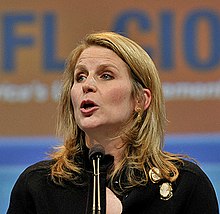
As the national political conventions are staged and the presidential election campaign kicks into high gear AFL-CIO Secretary-Treasurer Liz Shuler says economic justice for working families must not be ignored.
She says public policies that help working families goes way beyond the political.
Liz Shuler added:
It’s not about politics. But we need the politicians to really hear us, lifting up again the right to a quality education, the right to a secure retirement and a healthy future, saving the middle class – not only preserving it but so it thrives.
Shuler says the Second American Bill of Rights – a workers’ Bill of Rights – is being delivered to both political conventions.
Shuler noted:
We are going to be delivering the Workers Bill of Rights to both conventions. And we hope that they will raise these issues in their platforms and on the floor so the delegates know that working family issues need to be a part of this process and can’t be ignored.
There are some Republicans who are friendly to labor, particularly during an election. For the most part, Republicans have been anti-labor since the late 19th and early 20th century.
The AFL-CIO says Thursday’s announcement of an Attorneys General settlement with banks on fraudulent mortgage and foreclosure practices is a step towards addressing the housing and foreclosure crisis that still plagues us. The $25 billion settlement provided some compensation for foreclosure victims and homeowners who are underwater on mortgages without requiring individuals to waive their legal claims. The AFL-CIO applauded Attorneys General Eric Schneiderman, Kamala Harris and others who the labor federation says fought to improve the terms of the settlement. It’s their efforts, the AFL-CIO says that made sure banks have not been released from their liability for fraud and other illegal conduct involving mortgage backed securities that were central to the Wall Street financial meltdown. The AFL-CIO is urging President Obama to “provide the federal investigative task force with the resources necessary to address the $750 billion in negative home equity that is the result of illegal conduct by banks.”
By Doug Cunningham
The AFL-CIO says Thursday’s announcement of an Attorneys General settlement with banks ons is a step towards addressing the housing and foreclosure crisis that still plagues us.
The $25 billion settlement provided some compensation for foreclosure victims and homeowners who are underwater on mortgages without requiring individuals to waive their legal claims.
The AFL-CIO applauded Attorneys General Eric Schneiderman, Kamala Harris and others who the labor federation says fought to improve the terms of the settlement. It’s their efforts, the AFL-CIO says that made sure banks have not been released from their liability for fraud and other illegal conduct involving mortgage backed securities that were central to the Wall Street financial meltdown.
The AFL-CIO is urging President Obama to “provide the federal investigative task force with the resources necessary to address the $750 billion in negative home equity that is the result of illegal conduct by banks.”
Nick Hanauer isanother multimillionairewho says its time to tax the rich. The venture capitalist, who has launched more than 20 companies and is an original investor in Amazon.com, says Republicans are completely wrong when they claim that raising taxes on the rich—the so-called job creators—would kill job growth because “Rich people like me don’t create jobs, middle-class consumers do.”
So let’s give a break to the true job creators. Let’s tax the rich like we once did and use that money to spur growth by putting purchasing power back in the hands of the middle class. And let’s remember that capitalists without customers are out of business.
Hanauer also points out that the 99 percent have not gotten a fair shake.
If the average American family still got the same share of income they earned in 1980, they would have an astounding $13,000 more in their pockets a year. It’s worth pausing to consider what our economy would be like today if middle-class consumers had that additional income to spend.
It should be clear by now the economy that the policies of FDR and the Democrats produced is a lot fairer and more robust economy than the GOP vision that started with Reaganomics and went down the tubes with the Bush Ownership Society.
Unfortunately, the Democrats had an opportunity to fix the tax system in 2008, but they didn't. This was the biggest failure of the Obama adminstration.
By 2014, the new health care reform law will mean thousands of dollars in health insurance premium savings and out-of-pocket health care costs for working families and small businesses, finds a new report from the U.S. Department of Health and Human Services (HHS). Says HHS Secretary Kathleen Sebelius:
For too long, skyrocketing health care costs have made it hard for businesses to provide coverage for employees and have made it difficult for families to afford coverage….The report shows that the health care law will bring major savings for families as it begins to take shape. Without the Affordable Care Act, consumers and businesses would face higher premiums, fewer insurance choices, and rapidly rising health care costs.
From 1999 to 2009, premiums more than doubled, rising by more than $7,500 for the average family that gets insurance through an employer.
The high cost of health care made it difficult for many small businesses to offer insurance to their workers. The percentage of small employers offering health insurance dropped from 65 percent to 59 percent between 1999 and 2009.
The report finds that, compared to what they would have paid without the law:
Middle-class families purchasing private insurance in the new State-based Health Insurance Exchanges could save as much as $2,300 per year in 2014.
Tax credits provided by the Affordable Care Act will lead to even greater savings. For example, in 2014, a family of four with an income of $33,525 could save as much as $14,900 per year since they also will qualify for tax credits and reduced cost sharing.
In 2014, small businesses, on average, could save up to $350 per family policy and many may be eligible for tax credits of up to 50 percent of their premiums.
The tax credits are already available to small businesses and cover 35 percent of their premiums. For example, a firm with 10 workers who earn an average of $20,000 annually could currently receive credits of $35,000 annually. These tax credits could save small businesses $6 billion in 2010 and 2011.
All businesses will likely see lower premiums of $2,000 per family by 2019, which could generate millions of dollars in savings.
Congressional and state Republican lawmakers have vowed to repeal the Affordable Care Act.
Earlier this month, the new House majority passed a repeal bill and several states attorneys general have filed suits against the new health care reform law.
If those attempts are successful, Sebelius says, families and small business owners will be hard hit in the pocketbook by higher premiums and other health care costs.The house bill ws voted own in the Senate this week.
We can’t afford to go back to the days when uncontrollably rising costs put a bigger and bigger burden on family budgets and business balance sheets.
Click here for the full report. Click here, here and here to read stories from real people about how the Affordable Care Act has helped them and their families.
As the US heads into a New Year real economic recovery remains out of reach for millions of U.S. workers. Doug Cunningham reports.
AFL-CIO President Rich Trumka says the disconnect between Washington politicians and working families is dangerous and alarming.
The labor federation is once again calling for a serious job creation program.
Nicole Woo, Domestic Policy Director at the Center for Economic and Policy Research, says there’ a budget blueprint plan that would mount a serious jobs investment program along with other changes needed to put America back to work.
The AFL-CIO and Working America have created an online database called Job Tracker that shows you how corporations shipping jobs overseas is affecting your community. AFL-CIO President Rich Trumka.
Trumka: “It allows anyone to see which corporations are the bad actors in their community. The new Job Tracker database details job loss due to outsourcing, safety violations and discrimination cases. It truly is the first of the kind and largest publicly available, housing information on more than 400,000 corporations and subsidiaries."
In the last ten years the U.S. has lost more than 5 million manufacturing and 850,000 information sector jobs, many of which have been shipped overseas.
Trumnka: “This resource gives working people new ammunition to show that outsourcing has caused an unacceptable and systematic level of job loss. Job Tracker will give everyday people the opportunity to actually see what's happening to their community and shine the light on what corporations are doing. Outsourcing of American jobs is part of a pattern that's eroded the domestic manufacturing base to the point where experts are now questioning whether our national security is at risk."
Rightardia used the database to see who was exporting jobs in a local area code:
The AFL-CIO database also indicated that 142 compnies inthe area had authorized mass layoffs in Tampa Bay. The bad actors are US corporations, not the government.
President Barack Obama delivers remarks to the AFL-CIO Executive Council Meeting at the Washington Convention Center in Washington August 4, 2010. (Official White House Photo by Lawrence Jackson)
Posted by Jesse Lee on August 4, 2010 at 4:47 PM EDT
Speaking at the AFL-CIO Executive Council Meeting here in DC, the President thanked “all my brothers and sisters in the AFL-CIO” who have worked so hard to help get America’s economy back on track.
He spoke of the progress that’s been made, with millions of people at work now because of the Recovery Act, and the length left to go until the millions still out of work find their jobs.
As for his plans going forward, he summed it up in “three powerful words”:
Together, we’re jumpstarting a new American clean energy industry -- an industry with the potential to generate perhaps millions of jobs building wind turbines and solar panels, and manufacturing the batteries for the cars of the future, building nuclear plants, developing clean coal technology.
There are other countries that are fighting for those jobs, in China and India and in Germany and other parts of Europe. But the United States doesn’t play for second place.
As long as I’m President, I’m going to keep fighting night and day to make sure that we win those jobs, that those are jobs that are created right here in the United States of America and that your members are put to work. (Applause.)
So the message I want to deliver to our competitors -- and to those in Washington who’ve tried to block our progress at every step of the way -- is that we are going to rebuild this economy stronger than before, and at the heart of it are going to be three powerful words: Made in America. Made in America. (Applause.)
That’s why we’re finally enforcing our trade laws -- in some cases for the very first time. That’s why we’re fighting for tax breaks for companies that invest here in the United States as opposed to companies that are investing overseas or that keep their profits offshore.
Because it is my belief -- and I know it’s the belief of this room -- that there are no better workers than U.S. workers. There are no better workers than your members. (Applause.)
And they are absolutely committed to making sure that America is on the rise again. And we are going to keep moving forward with them -- not moving backwards but moving forward with them.
As we rebuild our economy, we’re going to rebuild America as well. Over the last 20 months, bulldozers and backhoes have been whirring in communities across the country, as construction crews from local companies repair roads and bridges, railways and ports.
That was part of our plan, and it’s put hundreds of thousands of folks to work. But there’s a lot more to do to rebuild our infrastructure for the 21st century, and a lot more Americans who are ready and willing to do that work.
So that, too, is an area where we’ve got to keep moving forward.
AFL-CIO President Rich Trumka had plenty to say about making the economy work for working people when he took the podium Monday at the National Press Club in Washington, D.C. So much, in fact, that he ran over the allotted time. When they tried to cut him off, though, Trumka wasn’t about to let workers voices be curtailed so easily.
Trumka told the National Press Club audience that a disastrous decade for workers economically - topped off by the Great Recession - demands much more than the usual fixes for cyclical recessions.
Trumka: “This is not a portrait of a cyclical recession, but of a nation with profound, unaddressed structural economic problems on a long-term, downward slide.”
Trumka says workers and their unions built up a strong middle class over several decades, but…
Trumka: “A generation of destructive, greed-driven economic polices has eroded that progress and now threatens our very identity as a nation.”
Trumka called for a major re-booting of our economy to address the under-investment in America’s economic foundation and to create an economy that works for working people. And that includes a serious and quick jobs creation package from Congress.
Trumka met Monday with President Obama on health care reform and at the National Press Club he reiterated that the Senate version of health care reform is not worth the support of working people. And Trumka had this to say at the National Press Club on the Employee Free Choice Act labor law reform.
Trumka: “I think you’ll see the Employee Free Choice Act passed in the first quarter of 2010. You’ll see it have some real effect. We will start creating and making good jobs in this country again.”
The Centers for Disease Control and Prevention (CDC) estimates that one worker sick with the H1N1 (swine flu) virus will infect one in 10 co-workers if he or she goes to work with the virus. Even more frightening, another recent study predicted that 63 percent of Americans will be infected with the virus by the end of December.
Today, family advocates and heath care professionals told the House Education and Labor Committee that along with vaccinations, and good hygiene practices, the best way to protect workers and slow the spread of the H1N1 virus is through guaranteed paid sick leave legislation, such as the Healthy Families Act.
The CDC’s guidelines to employers and workers to slow the spread of the virus says workers who suspect they have the swine flu or another influenza-like illness should stay home and employers should allow workers to stay home “without fear of reprisals or…losing their jobs.”
But nearly half of all private-sector workers—and 76 percent of low-income workers—have no paid sick leave. That leaves sick workers facing the dilemma of staying home and losing several days of pay or likely spreading the disease to fellow workers and the public. Many low-wage workers have jobs that have direct contact with the public, such as the food-service and hospitality industry, schools and health care.
Says Debra Ness, president of the National Partnership for Women and Families:
Congress should waste no time in passing paid sick days legislation so that working people can earn paid time off and help prevent the spread of illnesses, without jeopardizing their economic security.
Dr. Georges C. Benjamin, executive director of the American Public Health Association, says paid sick leave benefits both employers, workers and their families along with customers and the general public. For employers, Benjamin says:
Sick workers are not productive ones and by spreading disease in the workplace risk the overall productivity of the business. By providing paid leave for sick workers, worker safety and business productivity can both be enhanced—a win-win for employers.
While we want to encourage workers to make healthy and rational decisions, when they are faced with the choice of staying home sick without pay or going into work sick so they can put food on the table and pay their mortgage, many workers choose to go to work and “tough it out,” putting their co-workers and their customers at risk.
Committee chairman George Miller (D-Calif.) says that Congress has been “pushing for universal paid leave policies for workers of all income levels.”
Let’s face some simple facts: When you’re struggling to make ends meet, you’re going to do everything possible to not miss a day’s pay. The lack of paid sick leave encourages workers who may have H1N1 to hide their symptoms and come to work sick—spreading infection to co-workers, customers and the public. This isn’t good for our nation’s public health or for businesses.
Earlier this year, Rep. Rosa DeLauro (D-Conn.) and the late Sen. Edward Kennedy (D-Mass.) introduced the Healthy Families Act (H.R. 2460 and S. 1152), which would require businesses with more than 15 employees to provide workers with up to seven paid sick days a year to care for themselves or a sick child or spouse.
At a Senate hearing on H1N1 earlier this month, Deputy Secretary of Labor Seth Harris announced the Obama administration’s support for the Healthy Families Act.
The Healthy Families Act offers an important opportunity to provide workers with economic security by assuring that they have the ability to stay home if they are sick without fear of losing their jobs or being forced to go to work sick because they cannot afford to stay home. We support this bill and look forward to working with you on it as it moves through the legislative process.
For more on today’s House hearing—including an archived webcast—click here. For testimony and a video of the earlier Senate hearing, click here.
Also check out the AFL-CIO’s pandemic flu site, which includes vital resources for health care workers, firefighters, educators and more. Also check out www.flu.gov.
The 2009 AFL-CIO Convention just got a message from the top leaders in Congress: We stand with you and with America’s workers.
Speaker Nancy Pelosi (D-Calif.), the leader of the U.S. House, and Senate Majority Leader Harry Reid (D-Nev.) each delivered a video message to the opening session of the convention.
Pelosi thanked outgoing AFL-CIO President John Sweeney and the union movement, crediting union members with taking the lead in winning a pro-worker Congress and giving them the momentum needed to pass legislation that really changed lives. Pelosi said:
On behalf of the Congress, I thank all of you for your leadership for America’s working families.
Pelosi pointed to the minimum wage, the Lilly Ledbetter Fair Pay Act and the American Recovery and Reinvestment Act as successes for all workers that would have been impossible without the work of the union movement. She noted that, with President Barack Obama as a partner, we’re closer than ever to the long-term goals of making the economy and the health care system work for everyone again:
Today, you are organizing, marching, and leading the charge in the fight of our lives, to provide affordable, quality and accessible health care to everyone, and we will win. Thank you to the AFL-CIO, for your commitment to progress and prosperity. Onward to victory.
Reid said that, thanks to the hard work of union members around the country, we’re making real progress to fixing an economy that was leaving too many behind:
We demanded a new direction for our country. Together we stood up…we knew the challenges we faced were not created in a day, and we knew they would not be fixed overnight. We also knew we had no time to waste. We’ve made a good start, but we have so much more to do.
Reid pointed to successes in creating jobs, in helping children get health care and helping students go to college. He also said he wants to swiftly pass the Employee Free Choice Act.
I’m as committed today as ever to passing the Employee Free Choice Act and making it law.
It’s a sign of the changes the union movement has helped to make in this country that the top leaders in Congress are so enthusiastic to offer thanks to union members at this Convention.
Labor Day marches and rallies capped off more than a month of an incredible union member mobilization to move the health care reform debate beyond the screaming diatribes and disruptive tactics by opponents that marred the start of the congressional recess.
During the weekend, some 150,000 union members turned out for rallies, parades and picnics that not only celebrated the workers’ holiday, but showed broad support for comprehensive health care reform.
Those events followed the more than 400 August town hall meetings, health care forums and other events where more than 24,000 union members spoke up for health care and wrote letters, made phone calls and went door to door to educate their neighbors.
Click here to read about the 5,000 union family members at the Cincinnati AFL-CIO Labor Council Labor Day picnic, who heard President Obama say their efforts have helped bring “real reform” closer that it ever has been, although
“the special interests are doing what they always do—trying to scare the American people and preserve the status quo.”
Labor Day weekend also saw more than 3,000 union members from the Duluth (Minn.) Central Council give rousing ovations when Sen. Al Franken (D-Minn.), Rep. James Oberstar (D-Minn.) and Stewart Acuff, special assistant to AFL-CIO President John Sweeney, urged them to work even harder to counter the lies health care reform opponents are spreading.
In Sacramento, 1,000 union members and more than 30 elected officials took part in the Sacramento Central Labor Council’s gathering that focused on health care reform In Pittsburgh, more than 8,000 people, including Vice President Joe Biden, rallied for health care reform at the Allegheny Central Labor Council’s picnic.
Just prior to the Labor Day weekend, more than 3,000 Seattle union members and health care reform advocates marched and rallied to tell that state’s congressional delegation to “go back to Washington and finish the job of fixing our broken health care system.” Click here to read more from the Washington State Labor Council (WSLC).
Also last week, union members in Massachusetts capped off the month-long congressional recess mobilization at town hall meetings with Sen. John Kerry (D) and Rep. Stephen Lynch (D). Writes John Drinkwater, Massachusetts AFL-CIO organizing and mobilization coordinator:
If the two events during this past week are any indication, however, the right-wing’s attempt to disrupt the debate looks to have lost its steam at the end of the congressional recess. Union members and other supporters of health care reform far outnumbered right-wing protesters at both events.
Here’s what some other union members who e-mailed the AFL-CIO had to say about their town hall experiences.
Jo Anne H. of Salinas, Calif.:
There were enough calm people who really did come to hear some answers that the rabble rousers couldn’t really take over. All in all, it was a very educational night, and I was happy to realize that my congressman completely supports a healthcare reform that includes a public option.
Nick R. of Palisades Park, N.J.:
In general, it was a good meeting. Congressman (Steven) Rothman (D.) had the opportunity both to hear from his constituents and to explain his positions on health care reform. The two organized anti-reform groups there were not able to disrupt the meeting.
With Congress back in Washington, D.C., President Obama is set to deliver a national television speech tonight on health care reform. The fight goes on.
President Barack Obama speaks at the AFL-CIO Labor Day Picnic in Cincinnati, OH on Labor Day. September 7, 2009. Official White House Photo by Lawrence Jackson)
This Labor Day, many American workers will be watching their pennies as much as they watch the annual parades. This year, working people across the board are being hit with an unprecedented array of economic problems, ranging from a lack of jobs to reduced wages for those who have jobs.
The impact of the recession goes far beyond those people who are unemployed or underemployed. A combination of slow wage growth, mandatory unpaid leave and a drop in benefits is going to make it harder for the economy to recover, says a leading economist.
During a conference call with reporters today, Lawrence Mishel, president of the Economic Policy Institute (EPI), said the recession is hitting working people hard across the board, including white-collar workers, blue-collar workers, women, men, union members, nonunion workers and both college and high-school educated workers.
Later this week, EPI will release a briefing paper, “The Recession’s Hidden Costs: Workers Lucky Enough to Keep Their Jobs Still Feel the Pain in Their Paycheck,” which chronicles the widespread pain being spread by the recession.
Mishel points out that private-sector wages grew only by 1.3 percent between December 2008 and June 2009. Meanwhile, production and nonsupervisory workers—representing about 80 percent of employees—have seen their annual wage growth slow drastically to 1.4 percent after a relatively steady growth of 4 percent from 2007 to 2008.
This sluggish wage growth could have a serious dampening effect on the economy, Mishel says.
Wage growth is the fuel for what’s going to happen to household consumption growth, which is essential to a robust recovery.
Right now, wages are growing slower than the rate of inflation, and we’re going to see real wages falling remarkably in the months ahead.
Adding to the misery is the trend by employers to require workers to take furloughs—time off without pay. If you take a week off without pay, Mishel points out, it costs you 2 percent of your income, or takes away 2 percent of your ability to pay bills, buy food and support your family. In fact, furloughs have become so common that average weekly work hours are at the lowest level in the 35 years that records have been kept, he says.
These trends naturally are raising anxiety in the workforce. Mishel cited a recent Gallup Poll, which shows 31 percent of respondents say they are afraid of being laid off, up from 19 percent in 2003 at the height of the last recession. Some 27 percent say they are concerned that their work hours will be cut back, and 32 percent say they are worried that their wages will be reduced.
Women workers especially are being hurt, Mishel says. While the bulk of unemployment was among men, the wages of college-educated women dropped more than any other group.
Conservative activists are now admitting that the goal is no health care bill at all.
A conference call of conservative groups, including the National Tax Limitation Committee, the American Liberty Alliance, the “Tea Party Patriots” and others, organizers encouraged their members to pressure Republican negotiators not to back any any compromise health reform bill.
An AFL-CIO official who listened in on the call reported the GOP strategy. “The goal is not compromise, and ANY bill coming out this year would be a failure for us,” the call moderator said, according to AFL-CIO’s notes.
The conference call was first reported by Greg Sargent over at The Plum Line. The notes were also provided to POLITICO.
Rightardia comment: If cooler heads don't prevail, someone is going to get hurt or killed. It is just a matter of time. The Democrats out muscled the GOP in the 2008 election. We had three times the campaign staff on the streets. We can do it again.
For the first time, Obama's formidable political operation, Organizing for America, is calling on supporters to go to town meetings and show support for Congressional Democrats, as a way of countering the Tea Party brigade's efforts to lay siege to such gatherings.
And early this week, for instance, the AFL-CIO hosted a "webinar" training and organizing session with over 200 leaders from the organization's four regions.
AFL-CIO's lead health care advocate, Gerald Shea, observes, "When our people are organized, you're going to have a strong turnout and a strong visible presence. If there is a a disruption, we'll call for order and say, 'Many of us came here to to ask questions, not to harangue.'"
Still, Shea also says that they didn't plan on organizing large-scale turnouts at the town halls until this past Monday, because they were focusing on lobbying Congress through last Friday.
News about the GOP anti-reform mob scenes broke over the weekend. He notes that they expected "significant" right-wing activity at the town halls, but Shea says union activists were surprised by the "intensity" at these events. The push-back has begun.
On Thursday, AFL-CIO Secretary Treasurer Richard Trumka added a scathing critique of these "tea bagger"-style protests progressives and Democrats are challenging:
Major health care reform is closer than ever to passage and it is no secret that special interests want to weaken or block it...Mob rule is not democracy.
People have a democratic right to express themselves and our elected leaders have a right to hear from their constituents -- not organized thugs whose sole purpose is to shut down the conversation and attempt to scare our leaders into inaction.
An early sign of the union movement's challenge to mob rule was already shown at an event Wednesday in Indiana featuring President Obama. As the AFL-CIO Now blog noted:
At most of these town halls, the large majority want real discussion about health care reform. And union and health care advocates are helping ensure that happens.
For example, yesterday in Indiana, President Obama was scheduled to deliver a talk on the economy, green jobs and health care at a Wakarusa RV plant. Union and health care activists went to work, knowing protesters were set to be bused in to line the streets by the plant and grab headlines.
Union members and our allies called, sent e-mail messages and texted local unions and activists with the message "It's time to fight back for health care reform." Todd Anderson, AFL-CIO Midwest regional director, reports as many as 1,000 union members showed up, outnumbering the teabaggers by 10 to one.
Our allies at Health Care for America Now! have outlined a simple strategy activists can follow to make sure health care events set for the congressional recess are not hijacked by screaming teabaggers. It includes building turnout, making sure folks know what tactics to expect from the protesters, making contact with the media and more tips.
Richard Kirsch, the National Campaign Director of HCAN, declared:
We can't just wait for the public to recognize the reality behind this nutty minority. There are two prizes in the battle at hand -- the national press narrative and Congress' support. We have to win the press war by making it clear that shouts of "socialized medicine" and "government health care" are from a mob on the fringe of American politics. And we need to be sure that wavering Democrats in Congress see that there is strong popular support for health care reform.
The organization's strategy guide, targeted to activist groups, offered several key tactics to countering the anti-reform mobs, including:
Bring more people than the other side has. Their side will be smaller but noisier. You must bring enough people to drown them out and to cover all our bases so as to marginalize their disruptive tactics.
You don't want to get into a screaming match, but it must be obvious to everyone -- including press -- that you represent the majority.
Arrive earlier than the other side does. We need to stack our folks in the front to create a wall around the Member, and we need to stake out the best spots for visibility and signs.
Reconnaissance on the venue and an understanding of the staging will be important here. Make sure you do your homework so you can position your folks most effectively.
Be more visible than the other side. Bring more signs and leaflets, and whenever possible, post your signs all over the place so that you visually out-perform the other side.
Make sure you have people holding signs in every place where a TV camera is likely to be and that next to every right wing sign, there's one of your signs with your message...
The Campaign for America's Future and People for the American Way are also organizing average citizens to participate.
The Campaign for America's Future progressive battle plan underscores what's at stake:
Don't Let Special Interests Use Town Halls To Block Change
The battle for health care reform has moved to town halls during the August congressional recess. But the wild mobs disrupting events, intimidating lawmakers, and shouting down reform are not just expressing their views, they are doing the dirty work for corporate interests that want to cut the heart out of the Obama health plan.
We absolutely cannot let the far right fringe do the bidding of the insurance and drug lobbies and hijack the debate. We need to show up, big.
Take back the town hall! Make our voices heard for real health care reform.
Now the question is whether the majority that favors genuine health care reform will turn out in large enough numbers to take back the health care debate that's been hijacked by extremists and corporate interests?